Oahu Vacant Land Due Diligence Before You Buy
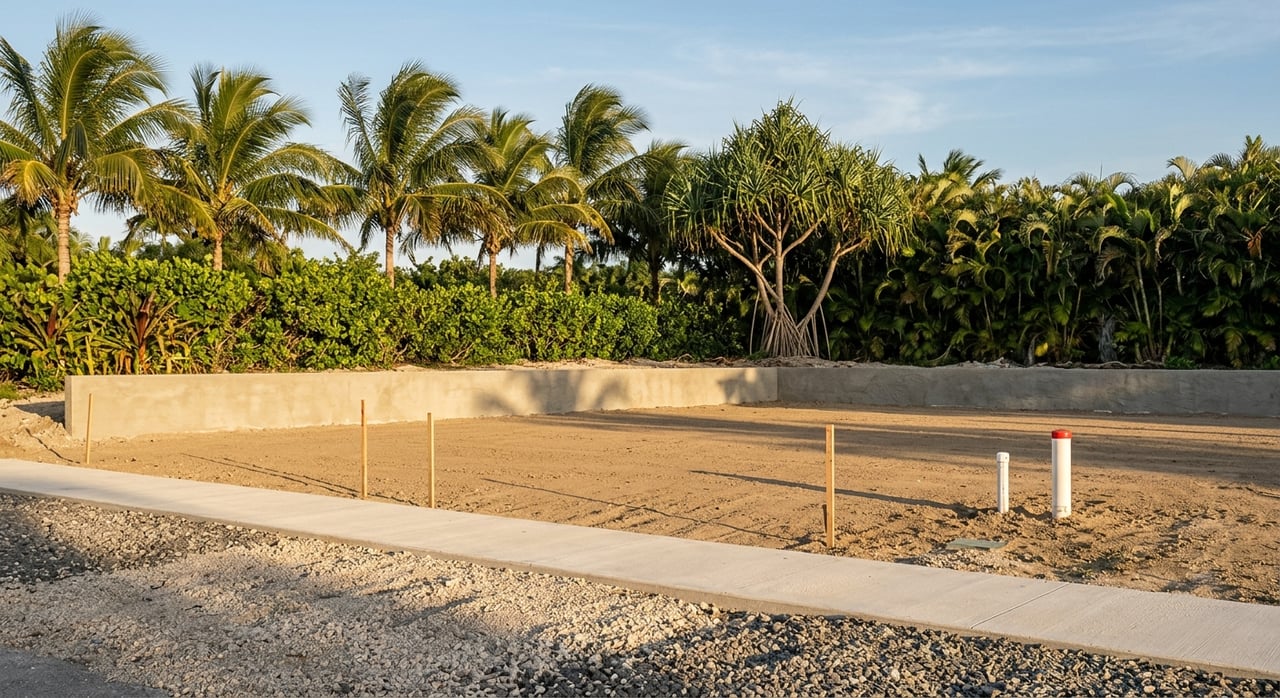
Buying vacant land on Oʻahu can feel full of possibility. It can also come with more moving parts than many buyers expect, especially if your goal is to build a custom home, coastal retreat, or long-term legacy property. Before you move forward, it helps to review the lot through a practical lens so you can understand cost, timing, and whether the parcel can truly support your plans. Let’s dive in.
Before you focus on views, privacy, or lot size, ask a more important question: Can this parcel support the home you want to build within your budget and timeline? On Oʻahu, that answer often depends on site-specific details, utility access, and the permit path.
The City’s permit process can coordinate multiple approvals through a one-stop permit package under Honolulu’s Land Use Ordinance. That can be helpful, but the timeline still follows the longest required approval. In other words, a beautiful parcel may still involve a long road to construction if several agencies or reviews are involved.
A smart first step is to define your intended build as clearly as possible. Even a preliminary concept can help you evaluate whether the lot is realistic for your goals, especially if you are considering a larger estate home, coastal residence, or architect-driven design.
With vacant land, the purchase price is only part of the story. You also need to account for the cost of preparing the site and getting it ready for construction.
According to the Honolulu Board of Water Supply water availability guidance, parcel reviews may require details such as the TMK, site access, elevations, contours, and layout information. The Board of Water Supply rules also state that water service is installed at the applicant’s expense, and applicable system facility charges must be paid before service is installed.
That means your working budget should usually include:
If you approach the purchase as a development project, not just a land acquisition, you will have a much clearer view of the true investment.
A parcel can look ideal online and still be difficult to build on. That is why buildability should be confirmed as early as possible during your due diligence period.
For many Oʻahu land buyers, the key issues are access, water, power, wastewater, topography, and hazard overlays. Each one can affect both cost and timing.
Start by confirming whether the parcel has legal access and whether that access is public or private. This matters because utility installation and future construction logistics may depend on how the lot is reached.
If a property fronts a private road or lane, utility extensions may become more complex. The Board of Water Supply rules note that if there is no public water system on that private frontage, the applicant must extend the supply pipe to the nearest public street with a water main.
Do not assume a parcel has water service just because nearby homes do. Water availability should be confirmed for the exact lot.
The Board of Water Supply states that it may issue, restrict, or withhold water commitments depending on available supply. That makes parcel-specific verification essential, especially before you remove contingencies.
Power service also deserves early review. Hawaiian Electric’s residential new service process requires a plot plan sketch and may involve a site visit, engineering and design work, and easement documentation.
The same guide notes that easement work can be a critical-path item, and some steps may take 90 to 120 days. If the lot needs new service or access work, that timeline should be part of your decision-making before closing.
Wastewater should be reviewed alongside water and power, not afterward. In metropolitan Oʻahu, the City notes in its planning guidance that the DPP Wastewater Branch manages sewer connection requests and that new sewer connections involve a Wastewater System Facility Charge.
Drainage is another issue that can be easy to underestimate. The same City guidance warns that unlicensed private storm drain connections are illegal and that altering drainage systems without engineering guidance can create unintended flooding. If a parcel has slope, runoff concerns, or unusual drainage patterns, those factors should be reviewed before you commit.
On Oʻahu, the physical features of the land can affect buildability just as much as zoning or lot size. Slope, contour, elevation, and drainage all shape how the site may be developed.
A steep or irregular lot may require more site work, more engineering, and a different budget than a flatter parcel. That does not automatically make it a poor purchase, but it does mean you should understand the likely implications up front.
Flood risk should be verified using current information, not assumptions. FEMA states that the Flood Map Service Center is the official public source for flood hazard information, and Honolulu County flood maps were updated in 2025.
FEMA also notes that there is no true no-risk zone. If the parcel is within a flood hazard area, additional documentation may be required as part of the building process.
According to Honolulu’s building code provisions for flood hazard areas, construction in these areas may require documentation sealed by a licensed surveyor, architect, or engineer. Depending on the site, elevation and floodproofing requirements may also apply.
Coastal and shoreline parcels often need even closer review. Honolulu’s Special Management Area and shoreline rules state that development within the Special Management Area is subject to review.
The same rules explain that a shoreline setback line determination may be requested before land use or building permits. Shoreline and setback lines must also be identified on the ground by a licensed surveyor before grubbing, grading, or construction. If you are buying land near the coast, these are not minor details. They can shape where and how you can build.
One of the biggest mistakes land buyers make is underestimating how long pre-construction approvals can take. Even with process improvements, timelines can still be substantial.
Honolulu’s 2025 Housing Plan reports that DPP permit prescreening time dropped to about one week, but the residential permit examples cited in the plan still ranged from roughly 170 to 197 days total in 2023 to 2024 examples. That is an important reminder that efficiency improvements do not always mean a short path to groundbreaking.
If the parcel is in a shoreline area, flood hazard area, or requires multiple agency reviews, the timeline may extend further. Your escrow strategy and purchase expectations should reflect that reality.
For certain coastal parcels, the Special Management Area process can add another layer of review. Under Honolulu’s shoreline ordinance, SMA minor permits may apply to some projects valued at $500,000 or less if they will not create significant adverse effects, while SMA major permits are required above that threshold or for projects with potentially significant effects.
For SMA major permits, the ordinance states that the council acts within 60 calendar days after receipt. Even so, it is wise to identify the likely permit type early so you can better understand the project path.
Vacant land on Oʻahu is rarely a purchase you want to evaluate alone. The right local professionals can help you review the parcel with more precision before you move forward.
Based on the utility and permit requirements in the official guidance, buyers often benefit from early input from a local architect, builder, surveyor, civil engineer, and title and escrow team. On flood-prone or coastal parcels, a Hawaii-licensed surveyor or engineer may also become part of the required documentation process.
This kind of team approach helps you answer practical questions before they become expensive surprises. It can also help you compare parcels more realistically when more than one option is on the table.
If you are reviewing vacant land on Oʻahu, these are some of the most useful questions to answer during due diligence:
The more clearly you can answer these questions, the more confidence you will have in your purchase.
The best vacant land purchases on Oʻahu are guided by more than scenery or potential. They are grounded in a clear review of buildability, utilities, site conditions, and the real path to permits.
If you are considering land for a custom residence, second home, or long-term investment, careful due diligence can protect both your vision and your budget. When you want a thoughtful, concierge-level approach to evaluating opportunities on Oʻahu, Elise Lee can help you navigate the process with local insight and white-glove guidance.
Stay up to date on the latest real estate trends.

Elise brings a fresh, creative international perspective to her Luxury Real Estate, Concierge & Interior Design career. She chairs the Honolulu Board of Realtors® City Affairs Committee, is on the Board of Directors for the Hawaii Economic Association, an Officer in the Confrérie de la Chaîne des Rôtisseurs Hawaii Bailliage.