Designing Koko Kai Indoor-Outdoor Living Spaces
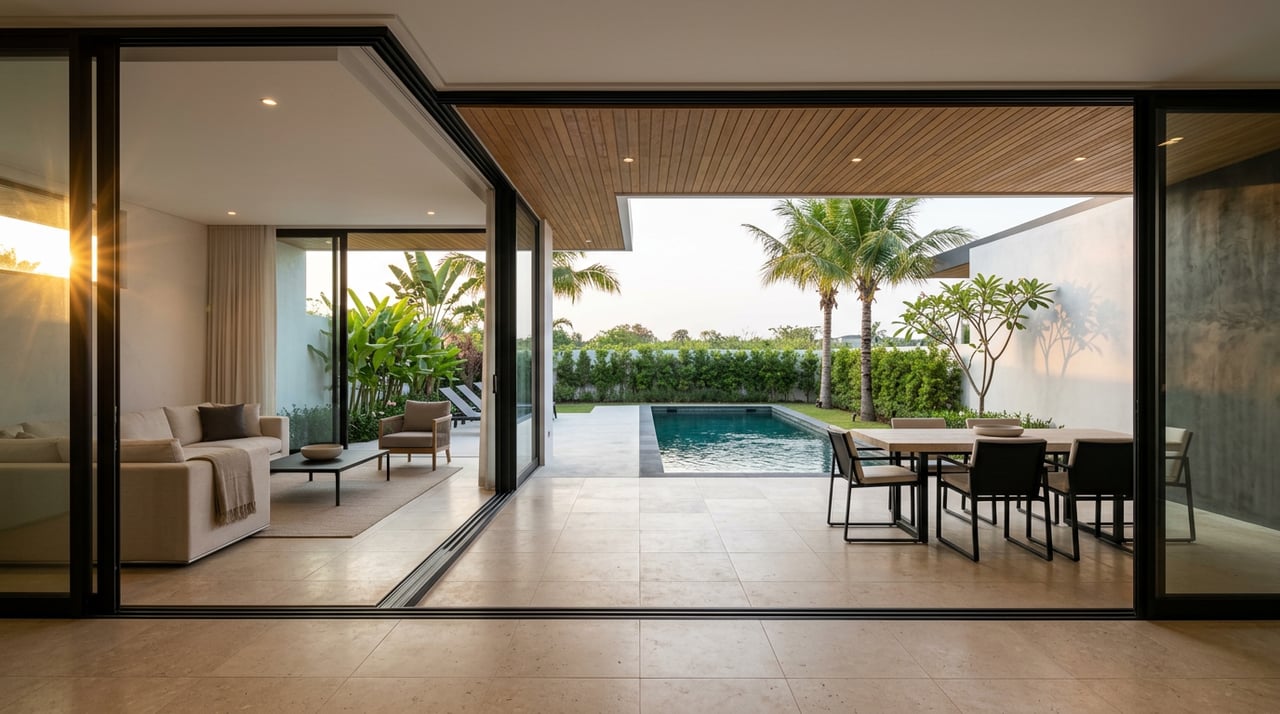
You come to Koko Kai for the views, the calm, and that feeling when your living room melts into the lanai and the Pacific beyond. If you are dreaming of a home that lives open to the air yet feels comfortable and protected, you are in the right place. In this guide, you will learn the key design moves, materials, and planning steps that help Koko Kai homes flow seamlessly between indoors and out. You will also find a clear checklist for permits and maintenance so your vision becomes a lasting reality. Let’s dive in.
Koko Kai sits upslope in East Honolulu’s Hawaii Kai area, where many lots rise to capture long views over Maunalua Bay, the Pacific, and Diamond Head. Many luxury homes here feature floor-to-ceiling glass, large sheltered lanais, and pool courts that frame the horizon. Recent Koko Kai listings showcase this design DNA, where the lanai is the main living room.
The setting is also dynamic. Proximity to the shoreline, landmarks like China Walls and Koko Kai Beach Park, and the neighborhood’s graded terrain all shape exposure to trade winds and surf. Smart indoor-outdoor design in Koko Kai balances big openings to the ocean with privacy, shade, and protection from wind and salt.
Oʻahu’s leeward coast has warm, steady conditions with small seasonal swings. The dry season from May through October tends to bring stronger trade winds, while the wetter season from November through March often brings weaker trades and occasional Kona storms. The State Climate Summary for Hawaiʻi explains how these patterns support natural ventilation most of the year.
Design for breezes and shade first, then add quiet, efficient cooling for still or stormy days. Always test actual wind exposure on site, since nearby homes, trees, and terrain can change airflow from lot to lot.
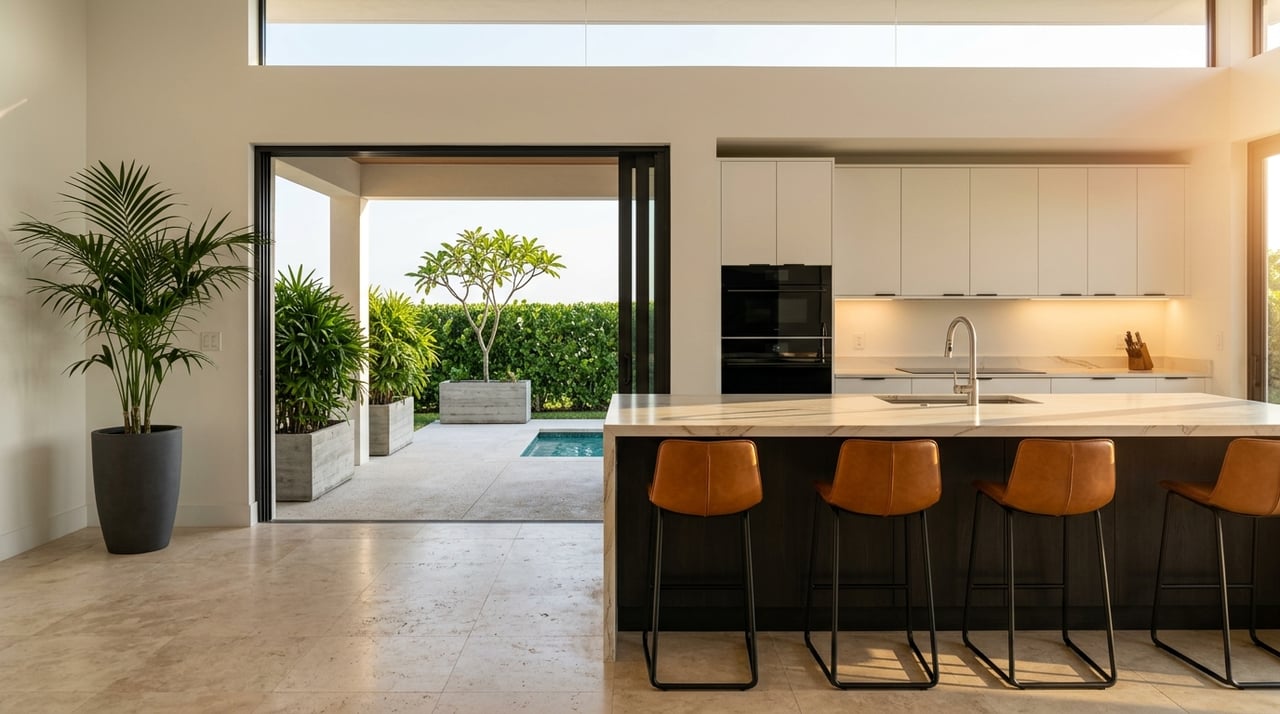
Place your main living, dining, and kitchen spaces so they open directly to a covered lanai. Treat the lanai as your outdoor living room, not a leftover deck. In Koko Kai, this sequence creates an immediate, casual connection to the pool and the view.
Keep sightlines long and clear. Frame the ocean or Diamond Head from the places you gather most. Tuck service areas like the pantry, baths, and stairs on the less scenic side. Low parapets and subtle level changes help you keep the horizon in view while shaping privacy.
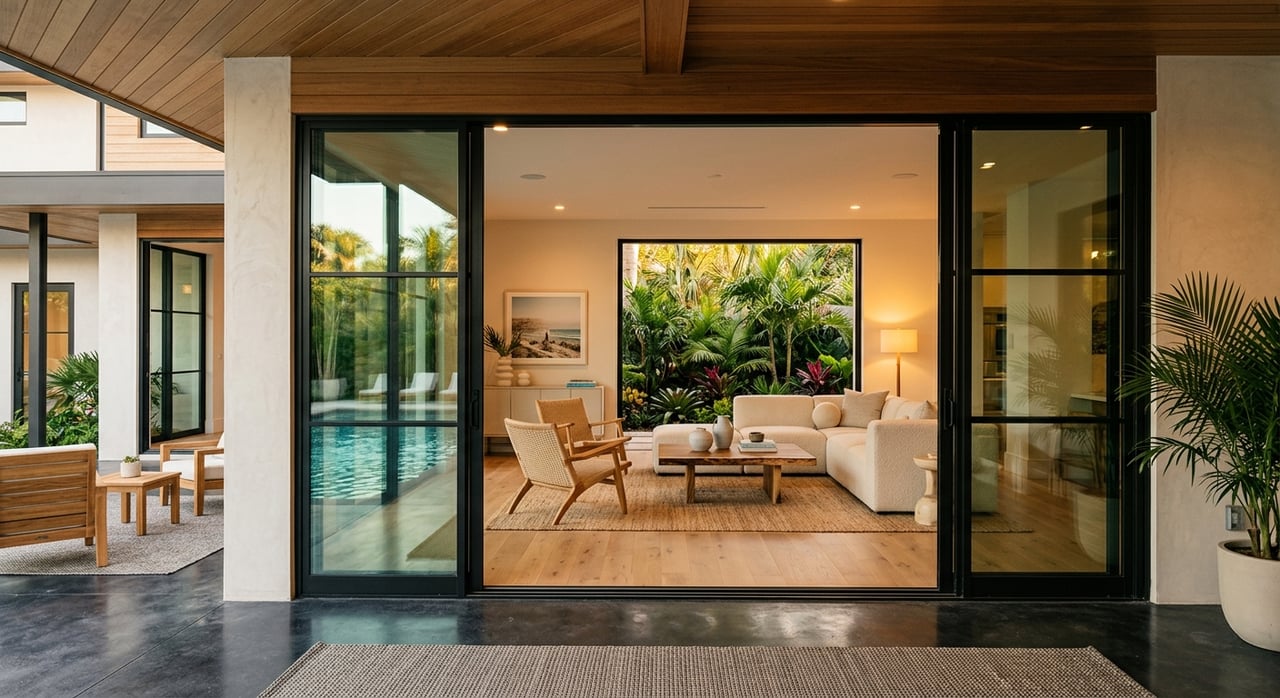
Large multi-panel sliders, pocketing doors, or folding walls let your interiors open wide to the lanai. For a true seamless feel, use a flush threshold with a discreet drain channel and a slight slope to move water away from the interior. Many Hawaii Kai homes pair floor-to-ceiling glazing with roofed lanais to blend inside and out while keeping glare and rain in check, as seen in area listings and design imagery.
In a marine climate, specify doors, windows, and hardware that are rated for coastal exposure and, where required, for local wind or impact conditions. Coordinate anchors and framing with your engineer to meet ASCE 7-16 wind and impact ratings. These details keep the opening wide when the weather is perfect and tight when the weather turns.
Cross-ventilation is your best friend in Koko Kai. Place operable windows or louvers on opposing walls, and pair a low inlet with a higher outlet like a clerestory or transom. This lets the breeze do the work. The ASHRAE Design Guide for Natural Ventilation supports these strategies, along with stack effect and night purge cooling.
Use the cooler night air to flush heat from interior mass, then start the day with fresh, comfortable spaces. Ceiling fans extend comfort by raising air speed without major energy use. For sun control, combine deep roof overhangs for high sun with vertical fins or wing walls for low east or west sun. Integrate operable louvers into the lanai roof so you can invite daylight while blocking peak summer rays.
In Koko Kai, pools and spas often sit between the house and the ocean. This creates a reflective foreground and an easy link from kitchen to grill to water. It also keeps your gathering spaces centered on the view, as seen in many local luxury listings.
Two tradeoffs matter here. First, orient the pool to capture late-afternoon sun for comfortable evening swims. Second, manage wind and spray. Low glass wind screens, pergolas, and dense but low plantings can shield breezes without blocking the horizon.
Salt air and surf are part of Koko Kai’s charm, but they are tough on materials. Plan for coastal-grade choices and smart detailing from day one.
Well-placed plantings calm wind, screen views, and support the local ecosystem. Choose salt-tolerant species and natives where possible. Naupaka and ‘akulikuli are common shoreline selections that handle salt spray and help stabilize edges. The University of Hawaiʻi’s extension resources profile naupaka and other shoreline natives.
Use layered planting to shape microclimate. Taller palms act like vertical screens without blocking air. Mid-height hedges create privacy, and lower groundcovers control glare and reduce reflected heat. Keep plantings low along primary view corridors to preserve the ocean panorama.
Coastal design brings extra diligence. Start early and work in sequence so your dream design stays on track.
In a marine zone, care is part of the design. Plan for it upfront so your home stays beautiful and secure.
A seamless indoor-outdoor home in Koko Kai starts with the lanai, honors the view, and respects the climate. When you pair cross-ventilation and shade with coastal-grade doors, windows, and metals, you get a living space that feels open, calm, and resilient. Thoughtful pool placement and low-profile wind buffers help you enjoy the water and the horizon without the trade wind hassle.
If you are exploring a Koko Kai purchase or planning improvements to an existing property, a local, design-savvy guide makes the process easier. With white-glove representation, curated staging and interior design, and culturally grounded hospitality, Elise Lee can help you refine your vision, align the right experts, and move with confidence.
Stay up to date on the latest real estate trends.
Elise brings a fresh, creative international perspective to her Luxury Real Estate, Concierge & Interior Design career. She chairs the Honolulu Board of Realtors® City Affairs Committee, is on the Board of Directors for the Hawaii Economic Association, an Officer in the Confrérie de la Chaîne des Rôtisseurs Hawaii Bailliage.