North Shore Oceanfront Or Estate Living Compared
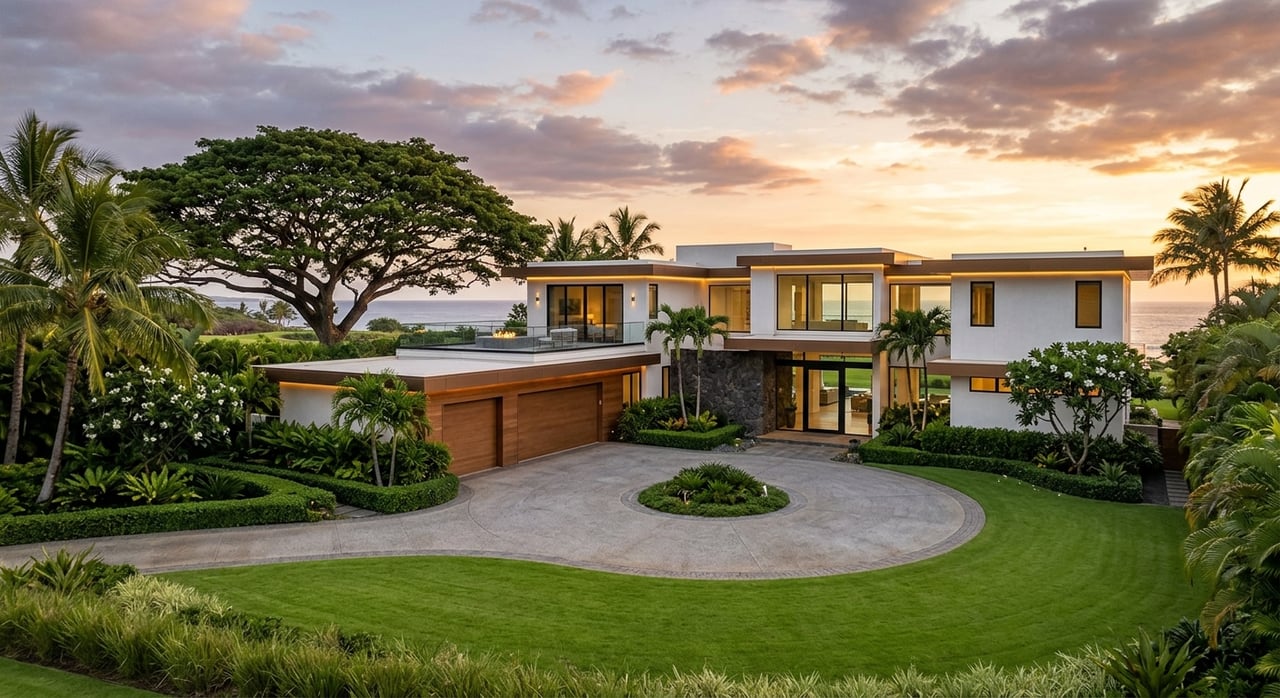
If you picture North Shore living as one simple dream, think again. Along this famous stretch of Oʻahu, oceanfront and inland estate properties offer very different daily experiences, ownership considerations, and long-term tradeoffs. If you are deciding between front-row beach access and a quieter estate setting, this guide will help you compare both with more clarity. Let’s dive in.
North Shore Oʻahu covers about seven miles of coastline, but it does not live like one continuous beach community. The area blends shoreline pockets, country towns, and inland rural parcels, each with a distinct rhythm.
Haleʻiwa is widely described as the North Shore’s social and artistic hub, while Waimea, ʻEhukai, and Sunset anchor the well-known surf corridor. The broader region is also known for a country atmosphere, working ranches, hiking, and beach-oriented outdoor living rather than an urban feel.
Planning documents for the Waialua area reinforce that this part of Oʻahu is meant to retain its rural and agricultural character. For you as a buyer, that matters because the difference between an oceanfront home and an inland estate is not just about view versus lot size. It is also about how the North Shore is organized, preserved, and experienced day to day.
Oceanfront homes on the North Shore offer immediate access to the beach and an unmistakable connection to the water. For many buyers, that direct relationship to surf, sand, and horizon is the entire point.
In summer, the water is often calmer, which can make the coastline feel serene and inviting. In winter, the same shoreline can become dramatically more active, with large and dangerous surf and major surf events shaping the season.
That seasonal contrast is one of the defining realities of oceanfront ownership here. You are not just buying a view. You are buying into a coastline that changes meaningfully throughout the year.
The strongest appeal of an oceanfront property is easy to understand:
For buyers seeking a second home, legacy property, or signature retreat, that kind of setting can feel hard to replicate anywhere else on Oʻahu.
Many buyers assume the seaward side of an oceanfront property functions like a fully private backyard. On the North Shore, that is not the case.
Hawaiʻi recognizes public shoreline transit and beach transit corridors seaward of the shoreline. Coastal landowners must also maintain seaward vegetation so it does not block access. In practical terms, you may enjoy direct access and exceptional views, but the shoreline edge is not fully private in the way some mainland buyers expect.
Coastal upkeep is a major part of the ownership equation. State guidance notes that Hawaiʻi’s coastline faces erosion, tsunamis, hurricanes, sea level rise, flooding, subsidence, and earthquakes, and that 70% of Hawaiʻi’s beaches are experiencing coastal erosion.
Healthy dunes can help buffer development from inundation and erosion damage. That means oceanfront ownership often involves thinking beyond finishes and landscaping and paying close attention to long-term resilience, shoreline conditions, and adaptation.
Shoreline properties usually face tighter development constraints than inland homes. Hawaiʻi law sets shoreline setbacks at not less than 40 feet inland from the shoreline, and counties can require greater setbacks.
State guidance also identifies Special Management Area permits as an important coastal management tool. If you are considering additions, walls, decks, pools, or other improvements near the shore, you should expect more review than you might on an inland parcel.
The City and County of Honolulu’s hazard mitigation planning notes that the entire coast of Oʻahu can be affected by tsunamis. Low-lying beaches, bays, lagoons, harbors, and stream mouths are among the most vulnerable areas.
For the North Shore regional planning area, the 2025 hazard mitigation plan reports 18,176 residents, with 7,689 people in the standard tsunami inundation area and 13,794 people in the extreme inundation area. If you are evaluating an oceanfront home, hazard exposure should be part of the conversation from the start, not an afterthought.
Inland estate living offers a different kind of luxury. Instead of placing the ocean at your doorstep, it often gives you more privacy, more land, and a quieter connection to the North Shore’s country setting.
This option tends to appeal to buyers who want estate-scale living without the constant exposure and oversight that can come with the shoreline. You may trade instant surf access for a more buffered and flexible day-to-day experience.
Planning documents for the Waialua area emphasize rural character, agriculture, and preservation boundaries. That supports a North Shore pattern where inland properties often feel more spacious and separate from beach activity.
For you, that can translate into advantages like:
If your goal is a long-term residence, multigenerational property, or a home with more breathing room, inland living may align better with how you actually want to live.
Choosing inland does not mean stepping away from the North Shore lifestyle. Haleʻiwa remains the social and artistic center of the region, and the major beach areas are still part of your regular map.
In many cases, inland owners are simply living a few minutes farther from the shoreline while staying within easy reach of beaches, cafés, and town services by car. The tradeoff is usually about immediacy, not disconnection.
Inland estates are generally less exposed to direct wave impact, erosion, and shoreline access issues. That said, they often require a different type of upkeep focused more on land use, landscaping, and managing larger outdoor areas.
The practical rhythm of ownership can feel less reactive than on the coast, but it may be more land-focused. For some buyers, that is a welcome shift. For others, it is a reminder that more acreage also means more to maintain thoughtfully.
Being inland does not remove all hazard concerns. Flood maps remain an important tool for understanding a property’s flood relationship, and buyers should also review tsunami evacuation information and sea level rise disclosure status where applicable.
On an island environment, broad coastal and environmental risks still matter even when you are not directly on the shoreline. A careful property review is still essential.
If you are weighing both lifestyles, this side-by-side view can help:
| Feature | Oceanfront Home | Inland Estate |
|---|---|---|
| Daily feel | Immediate beach connection | Quiet country setting |
| Privacy | More limited at shoreline edge | Often stronger overall privacy |
| Outdoor use | Driven by shoreline conditions | More flexibility across the parcel |
| Maintenance focus | Coastal exposure and resilience | Land, landscaping, and usability |
| Permitting | Often more constrained near shore | Typically less shoreline-related review |
| Main value drivers | Views, access, scarcity | Land size, privacy, estate feel |
Neither option is universally better. The right fit depends on how you want to spend your time, what level of exposure you are comfortable managing, and what kind of property story you want over the long term.
Most buyers who choose oceanfront are prioritizing front-row water views, beach access, and a daily connection to the surf. They are also comfortable planning for coastal maintenance, hazard mitigation, and more complex improvement review.
Buyers who choose inland estates usually put more weight on privacy, land, and a calmer day-to-day setting. They often want more flexibility in how they use outdoor space and may prefer an ownership experience that feels more tucked away.
A helpful question to ask yourself is this: do you want to live on the edge of the shoreline experience, or near it with more separation and control? On the North Shore, that answer tends to shape everything else.
Before making an offer on either type of property, it helps to review the practical details that affect long-term ownership.
These steps help you compare more than just lifestyle. They help you understand the ownership realities attached to each property type.
If your vision centers on sunrise surf checks, open water views, and direct beach access, oceanfront living may be worth the added complexity. If you are drawn to privacy, land, and a more grounded country setting with room to breathe, an inland estate may offer the better long-term match.
On the North Shore, luxury is not one-size-fits-all. It is shaped by coastline, land, access, and how you want your home to support your life. If you want thoughtful guidance as you compare North Shore oceanfront and estate properties, Elise Lee offers a private, concierge-level approach tailored to Oʻahu’s most distinctive homes.
Stay up to date on the latest real estate trends.
Elise brings a fresh, creative international perspective to her Luxury Real Estate, Concierge & Interior Design career. She chairs the Honolulu Board of Realtors® City Affairs Committee, is on the Board of Directors for the Hawaii Economic Association, an Officer in the Confrérie de la Chaîne des Rôtisseurs Hawaii Bailliage.