What Came Back to the Gold Coast This Summer (And What Never Left)
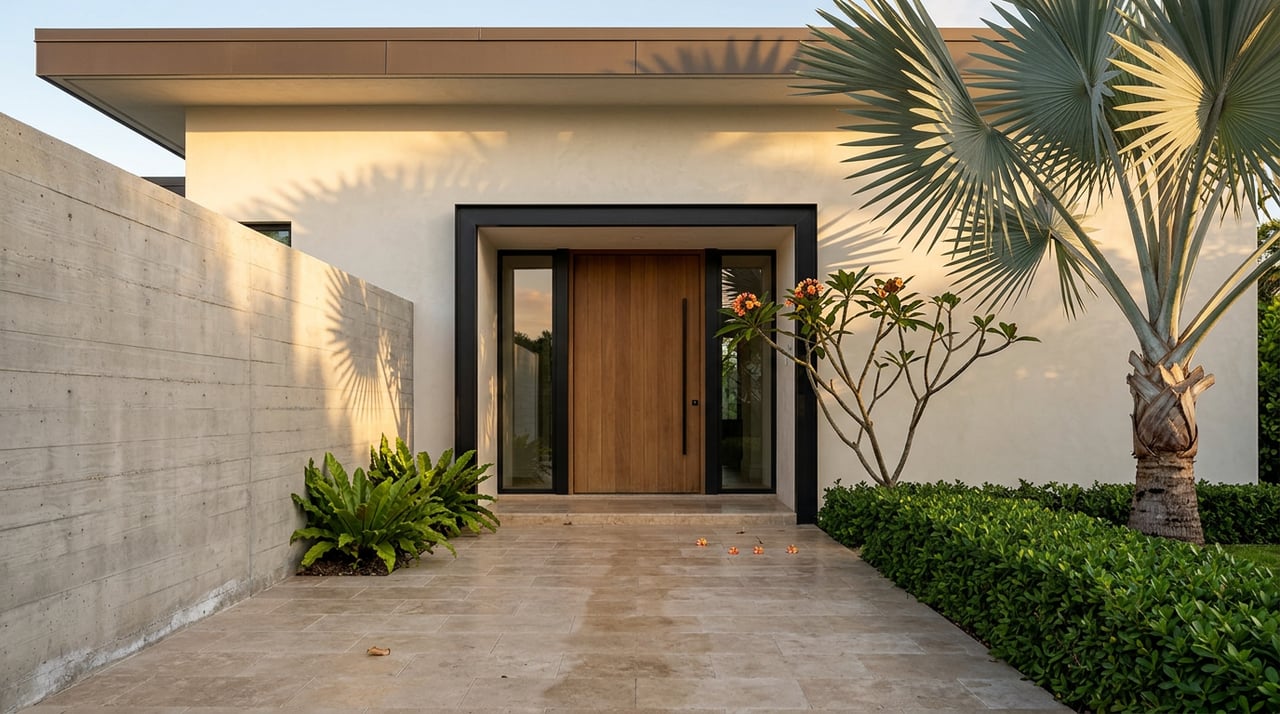
Walk the stretch of Kalakaua Avenue between the Elks Club and the Kapiolani Park Bandstand on almost any Sunday afternoon and you will pass the same landmarks a Gold Coast resident would have passed in 1930, in 1965, in 2010. The Tudor cottages of Coconut Grove sit low behind their hedges. The canoe racks at Outrigger are full. Somewhere past the banyans, a horn section is warming up. None of this is new. What is new, at least this summer, is who else showed up to share the grass.
On August 8, the 22nd Annual Korean Festival Hawaii set up on the lawns of Kapiolani Park for the first time since 2013. In the thirteen years between, the festival moved to Ala Moana Beach Park, then Kakaako Mauka Gateway Park, then the civic grounds at Honolulu Hale. Four venues in thirteen years is not a small wander for an event of this size. It is a festival that outgrew, or was priced out of, or simply lost its lease on the one park that first hosted it. This year it came home, with vendors like Onkee Korean Grill House serving kimchi arancini alongside a hanbok fashion show and a kimchi eating contest.
Six days earlier, on August 2, the 85th annual Na Hula Festival ran its usual course at the same bandstand, the way it has almost every year since 1940. No press release explaining a return. No decade-long detour through other parks. Organized by the City and County of Honolulu's Department of Parks and Recreation, it is the longest-running noncompetitive hula festival in the state, and this year's lineup included performances from Halau Na Pua Hala Kunou i ke Kai, Na Wahine o ka Hula mai ka Puuwai, and the Royal Hawaiian Band, with the 2026 Lei Queen Pua and her court in attendance.
Those two dates, six days apart on the same lawn, tell you something about this neighborhood that the postcard version leaves out.
Start with the geography, because it explains everything that follows. The Gold Coast is not a marketing name for a generic strip of oceanfront. It is the specific run of Kalakaua Avenue where Coconut Grove's single-story cottages, most built in the 1920s and 1930s, sit protected on both the Hawaii State Register and the National Register of Historic Places. From nearly any one of them, it is a short walk to Sans Souci Beach and Kaimana Beach, where the Outrigger Canoe Club, founded in 1908, and the Elks Club, established in 1919, have shared the same stretch of sand for more than a century without either one needing to relocate. Continue past the Natatorium Memorial, built in 1927 as a war memorial pool, and the sidewalk simply becomes Kapiolani Park.
That compactness is the actual amenity here. You do not drive to a canoe club or an oceanfront social hall. You walk past it on your way to somewhere else, the way people walk past a favorite bakery.
The bandstand at the center of the park has been hosting the Royal Hawaiian Band on Sunday afternoons for so long that nobody treats it as an event anymore. The band itself dates to 1836, founded by King Kamehameha III, and it remains the only full-time municipal band in the country, an agency of the City and County of Honolulu rather than a nonprofit or a tourism initiative. Its schedule has two fixed points each week: Friday at noon on the grounds of Iolani Palace, and Sunday afternoon at the Kapiolani Park Bandstand, under the same banyan canopy that has shaded the seats there for decades.
Compare that to the Korean Festival's route. One institution held its ground on twenty acres of city parkland through a century of change in beach volleyball trends, hotel construction, and neighborhood turnover. The other needed four venues in thirteen years before landing back where it started. Neither trajectory is a verdict on either event. But if you live on the Gold Coast, the difference tells you which rituals you can set your calendar by and which ones you should treat as a pleasant surprise when they resurface.
A short list of how long some of this has been standing:
That is a lot of longevity concentrated on one lawn, with one conspicuous gap in the middle of it.
If Sunday afternoon belongs to the bandstand, weekend mornings on this stretch belong to Hau Tree, the restaurant at Kaimana Beach Hotel named for the actual hau tree grove where Robert Louis Stevenson is said to have rested and written during his stays on this coastline. The restaurant won Gold for Best Outdoor Dining and Silver for Most Romantic Dining at the 2025 Honolulu Magazine Hale Aina Awards, and took the Honolulu Star-Advertiser Ilima Award as the public's choice for Best Breakfast Restaurant in 2024. Those are not tourist-brochure superlatives. They are local reader polls, voted on by the same people who might otherwise be eating breakfast at home before the Sunday concert crowd starts filling in the park benches.
That is the two-hour arc this neighborhood offers on a good weekend: eggs under the hau trees, a walk past the canoe club racks, and a seat on the grass by early afternoon for a band that has not missed a beat in nearly two centuries. It does not require tickets, reservations made weeks out, or a car. It requires living close enough to do it on foot, which is the actual, unadvertised value of a Gold Coast address.
Here is the honest way to think about what happened on that grass in the first two weeks of August. A festival with thirteen years of displaced history finally found its way back. A hula festival with 85 unbroken years never had to. A weekly concert older than the Hawaiian Kingdom's overthrow kept playing through both.
None of that is a reason to buy or sell anything. It is simply what it means to already live here: your neighborhood's biggest civic gatherings are not guaranteed to stay put, but its smallest, oldest rituals somehow always do. If you were wondering why the Sunday concert never seems to need announcing while the bigger festivals occasionally vanish for over a decade at a time, that is the pattern hiding in plain sight on the same twenty acres.
For residents who have watched this rhythm hold for years, or who are just now noticing how much of the neighborhood's character runs through that one park, it is worth remembering how rare that kind of continuity actually is on an island where almost everything else turns over. When the day comes that you want to talk about what a home in this specific stretch is actually worth, or what it takes to sell one with the discretion a place like this deserves, Elise Lee is glad to have that conversation. Request a Private Consultation whenever the timing feels right.
Stay up to date on the latest real estate trends.
Elise brings a fresh, creative international perspective to her Luxury Real Estate, Concierge & Interior Design career. She chairs the Honolulu Board of Realtors® City Affairs Committee, is on the Board of Directors for the Hawaii Economic Association, an Officer in the Confrérie de la Chaîne des Rôtisseurs Hawaii Bailliage.